
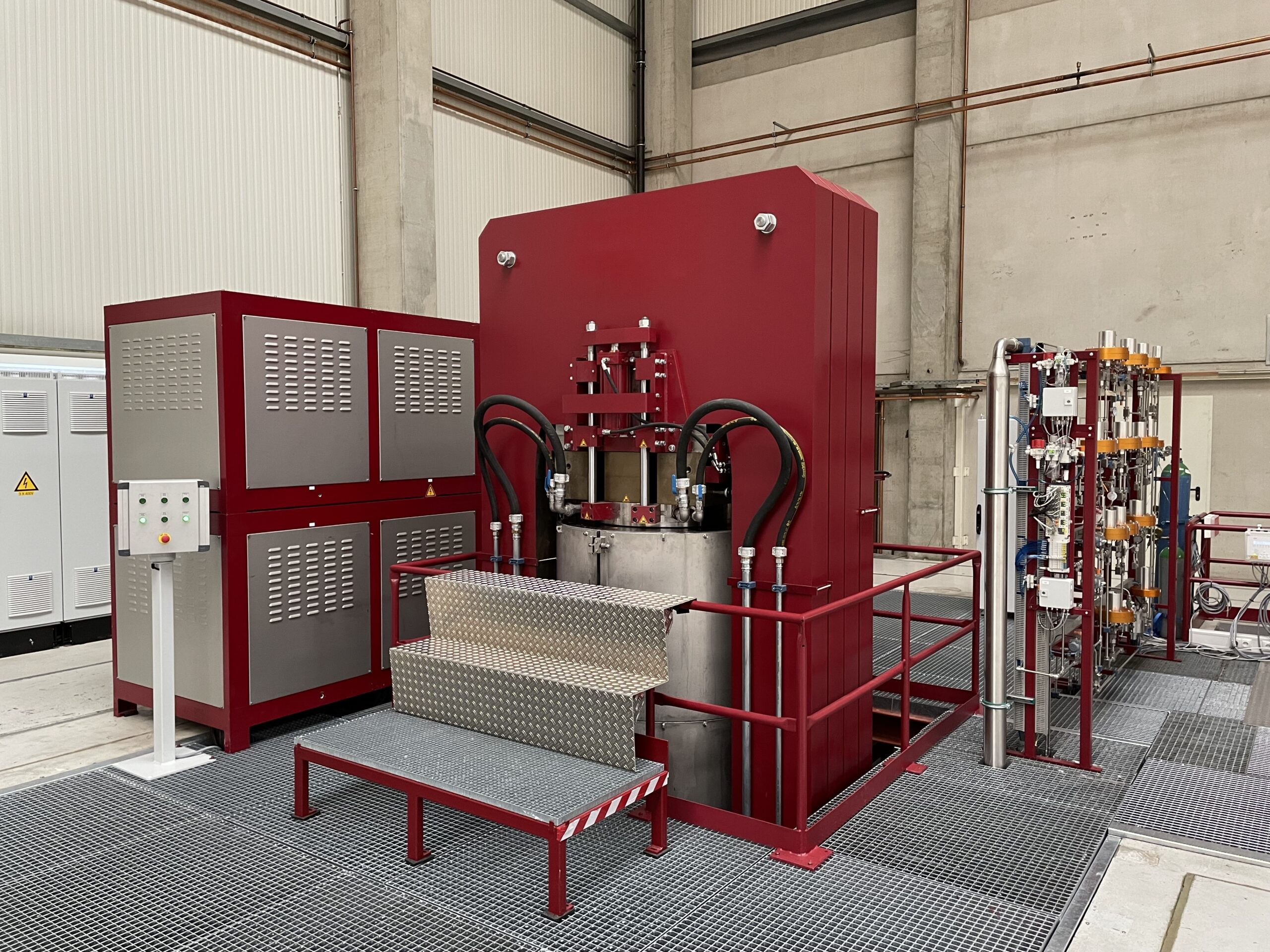
Hot Isostatic Pressing (HIP) is a manufacturing and materials-processing technology that has evolved significantly since its origins in the mid-20th century. It is a process that uses high temperature and high isostatic gas pressure—typically argon—to eliminate porosity in materials and improve their mechanical properties. Today, HIP plays an essential role in industries such as aerospace, automotive, energy, and medical device manufacturing.
advancement following World War II. Scientists and engineers were increasingly focused on improving the performance of high-strength materials, particularly metals and ceramics used in demanding environments. Early research into powder metallurgy and diffusion bonding highlighted the limitations caused by internal voids and defects. These imperfections reduced strength, fatigue resistance, and reliability—critical concerns for emerging aerospace applications.
The initial development of HIP was driven largely by research institutions and government-funded laboratories. One of the earliest practical uses of the process was in the consolidation of nuclear fuel elements. Engineers discovered that by applying uniform pressure from all directions at elevated temperatures, they could densify materials more effectively than with traditional pressing or sintering techniques. This “isostatic” pressure ensured that force was distributed evenly, minimizing distortion and allowing complex shapes to be processed.
By the 1960s and 1970s, HIP technology began to transition from laboratory experimentation to industrial application. Equipment manufacturers developed specialized pressure vessels capable of safely handling extreme conditions—often exceeding 1000°C and 100 MPa. During this period, HIP became particularly valuable in the aerospace industry, where it was used to improve the integrity of cast turbine blades and structural components. The ability to close internal pores and heal microcracks significantly enhanced component lifespan and safety.
The 1980s and 1990s marked a phase of rapid expansion and refinement. Advances in computer control systems allowed for more precise regulation of temperature and pressure cycles, improving consistency and repeatability. HIP was increasingly integrated with other manufacturing processes, such as casting and powder metallurgy, forming what is now known as “HIPing” as a post-processing step. This era also saw the rise of near-net-shape manufacturing, where parts required minimal machining after densification.
In recent decades, HIP has gained renewed importance due to the rise of additive manufacturing (3D printing). Additively manufactured metal parts often contain internal porosity and residual stresses. HIP has become a crucial post-processing method to improve density, mechanical strength, and fatigue performance in these components. This has made it indispensable in high-performance sectors, including aerospace and medical implants.
Today, HIP technology continues to evolve, with innovations such as faster cycle times, energy efficiency improvements, and integration with digital manufacturing systems. Modern HIP units are capable of processing large and complex components with high precision, supporting the growing demand for advanced materials.
In summary, the history of Hot Isostatic Pressing reflects broader trends in materials science and engineering: the pursuit of stronger, more reliable materials and the continuous refinement of manufacturing techniques. From its early experimental beginnings to its current role in cutting-edge production, HIP has become a cornerstone technology in modern industry.